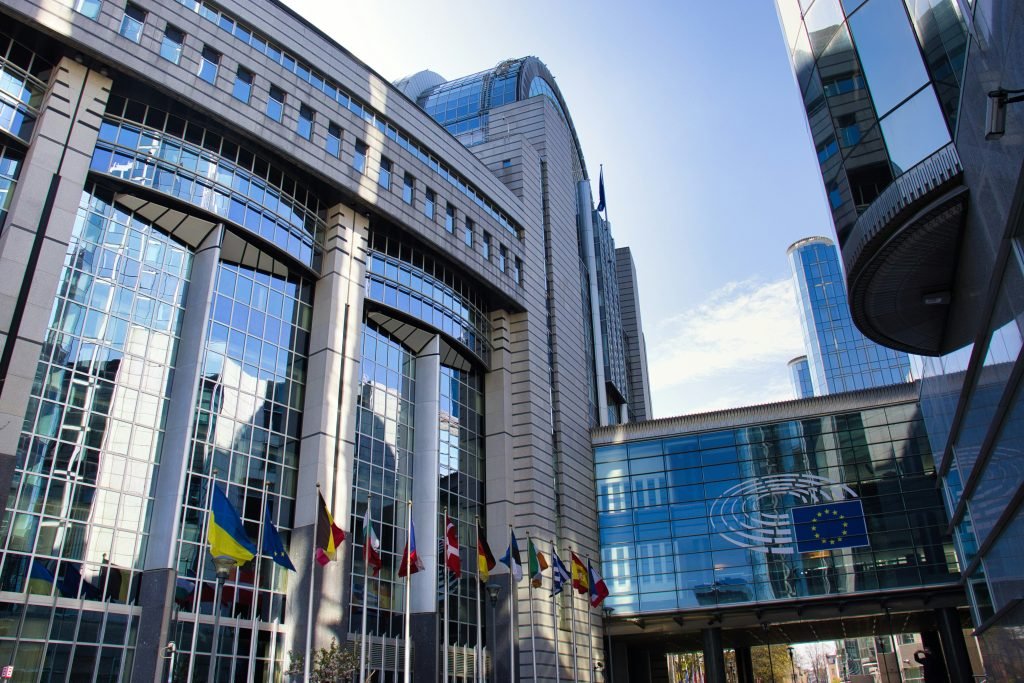
The Council of Europe and Microsoft have signed a memorandum of understanding (MoU) to strengthen cooperation on artificial intelligence (AI), responsible technology development, human rights, and digital governance. The agreement establishes a framework for exploring joint initiatives that support democracy, the rule of law, and inclusive technological innovation.
The signing ceremony took place at the Council of Europe’s headquarters in Strasbourg, France. Alain Berset, Secretary General of the Council of Europe, signed the agreement alongside Brad Smith, Microsoft’s Vice Chair and President.
Berset highlighted the importance of international cooperation as artificial intelligence advances faster than many existing democratic safeguards and legal frameworks can adapt.
“Working with business must be a priority to address the challenges,” Berset said, adding that collaboration with companies such as Microsoft could help ensure AI development remains responsible.
Responsible AI Development and Digital Governance
The new agreement establishes a framework for cooperation rather than committing either organisation to specific technology deployments. Its objectives include promoting human rights, strengthening democracy, upholding the rule of law, and addressing emerging challenges in the digital environment.
Through this partnership, the Council of Europe and Microsoft aim to explore opportunities to ensure that artificial intelligence and other digital technologies are developed and used in ways that respect fundamental rights and encourage inclusive innovation.
The memorandum also provides a basis for dialogue and the exchange of expertise on responsible technology development, reflecting the growing importance of collaboration between international institutions and the technology industry.
Microsoft AI Initiatives Focus on Inclusion and Cultural Diversity
One potential area of cooperation involves dialogue through Microsoft’s Open Innovation Centre in Strasbourg. The two organisations may exchange knowledge, expertise, and best practices to encourage responsible and inclusive technological development.
Language and cultural diversity are also included in the memorandum. Possible initiatives could support regional and minority languages, helping ensure that technological advances benefit a wider range of linguistic and cultural communities.
These activities remain subject to further agreement between the organisations.
Brad Smith said the success of artificial intelligence should be measured by its ability to serve people and deliver positive outcomes for society.
“Our partnership with the Council of Europe is putting that principle into practice, helping ensure that innovation remains grounded in human rights, democracy, and the rule of law,” Smith said.
His statement reflects the partnership’s emphasis on connecting AI innovation with established principles of human rights protection and democratic governance.
AI Cooperation Builds on Existing Projects
The agreement also aims to develop existing cooperation between Microsoft and the Council of Europe, including work related to the Register of Damage for Ukraine.
Microsoft’s AI for Good Lab already supports damage assessment activities associated with the project. The initiative forms part of broader efforts to document damage resulting from Russia’s war against Ukraine.
Building on this existing collaboration could create further opportunities to explore how artificial intelligence can support public-interest projects and address complex societal challenges.
Cybercrime Prevention and Data Protection
Beyond artificial intelligence, Microsoft and the Council of Europe have previously worked together on cybercrime prevention and international digital security.
Microsoft has supported the Council of Europe’s Budapest Convention on Cybercrime through initiatives including the Global Project on Cybercrime and the Cybercrime Octopus project.
These programmes help countries implement the international cybercrime treaty while promoting safeguards related to data protection, human rights, and the rule of law.
The existing cooperation provides a foundation for continued engagement as governments and organisations face increasingly complex digital threats.
What the Council of Europe–Microsoft AI Agreement Means
The memorandum signals a shared intention to explore how artificial intelligence can be developed responsibly while supporting democratic values and fundamental rights.
Rather than announcing a specific AI product or deployment, the agreement creates opportunities for future collaboration in responsible AI, digital governance, cultural and linguistic inclusion, and public-interest technology.
As artificial intelligence continues to transform industries and public services, cooperation between international institutions and technology companies may play an important role in addressing the legal, ethical, and social challenges associated with its development.
However, the scope and implementation of future initiatives will depend on further discussions and mutual agreement between the Council of Europe and Microsoft.